
By Rafiyat Sadiq
The military confrontation between Iran and Israel has entered its third week with a new wave of air and missile attacks, resulting in the death of an Iranian nuclear scientist and the destruction of multiple medical facilities in Tehran, Iranian media and international sources report.
Israeli forces struck dozens of sites across Iran early Friday, including what they described as missile manufacturing and military infrastructure. One strike in central Tehran killed an unnamed nuclear scientist, according to Israel’s public broadcaster, Kan. This follows a series of Israeli operations targeting Iranian nuclear personnel since the outbreak of hostilities on June 13.
The Iranian capital also saw drone and missile attacks that damaged residential buildings and struck a hospital—the third medical facility hit in recent days, according to Iran’s Health Ministry as reported by the state-run IRNA. Six ambulances were damaged, though there were no immediate reports of casualties in the hospital strike.
In a separate incident, a medical clinic in Kermanshah province was completely destroyed. Iran and Israel have both accused each other of targeting medical facilities, a potential violation of international humanitarian law.
Thousands Protest in Tehran
Despite ongoing air raids, large crowds took to the streets of Tehran after Friday prayers, condemning both Israel and the United States. Chanting anti-Israel slogans, the demonstrators called for an end to what they described as an unprovoked assault on Iranian sovereignty.
Israeli Defence Minister Vows Intensified Strikes
Israeli Defence Minister Yoav Gallant announced that the military campaign would escalate, targeting “symbols of the regime” in Tehran.
“We must strike at all the symbols of the regime and the mechanisms of oppression of the population, such as the Basij militia and the Revolutionary Guard,” Gallant said in a televised statement.
Missiles Hit Southern Israel, Injure Civilians
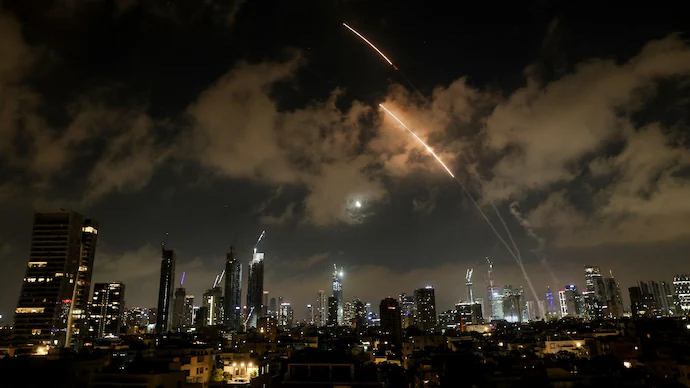
Meanwhile, Iran launched retaliatory missile barrages into Israel, striking the southern city of Beersheba and damaging civilian infrastructure, including the local Microsoft offices and the city’s main rail station, according to Israeli media outlets Ynet and Haaretz. Seven people sustained minor injuries, and operations in key areas were temporarily suspended.
Later missile impacts were reported in Tel Aviv and Haifa, with at least two people in serious condition from shrapnel wounds in the northern port city of Haifa. Air raid sirens have become a regular occurrence in major Israeli urban centers.
According to Al Jazeera correspondent Nour Odeh, reporting from Amman, the damage could have been worse.
“The south of Israel is more sparsely populated, and the one missile that we could see landed before the beginning of business hours, so there were no people in the offices, presumably,” she said.
Diplomatic Movement in Geneva
Amid the intensifying conflict, Iranian Foreign Minister Abbas Araghchi arrived in Geneva for a high-level meeting with his counterparts from France, Germany, the United Kingdom, and the European Union. The meeting is aimed at de-escalating the conflict but is overshadowed by the ongoing Israeli strikes.
President Masoud Pezeshkian reiterated Iran’s call for an immediate halt to Israeli air attacks.
“We have always pursued peace and stability,” he said in a Friday statement carried by Iranian media.
Foad Izadi, an international relations scholar at the University of Tehran, told Al Jazeera that Iran is unlikely to negotiate under fire.
“When you negotiate, it’s give and take. Iran cannot engage in that style of give and take when we have bombs falling,” he said.
Still, the presence of Araghchi in Geneva signals that Iran is not entirely closing the door to diplomatic engagement, according to Al Jazeera’s Tehran correspondent Tohid Asadi.
GOP fractured on Iran strikes as Trump weighs two-week deadline
Trump’s base is splintering from GOP hawks over possible US strikes on Iran. While some Republicans push for military action and regime change, key MAGA allies warn war could derail Trump’s domestic agenda. Trump says he’ll decide within two weeks on action in Iran.
Sources: Aljazeera, News Agencies

Rafiyat Sadiq is a political, justice, and human rights reporter with Pinnacle Daily, known for fearless reporting and impactful storytelling. At Pinnacle Daily, she brings clarity and depth to issues shaping governance, democracy, and the protection of citizens’ rights.