


In recent discussions surrounding Bishop Mathew Hassan Kukah’s stance on Nigeria’s security issues, particularly his rejection of the country’s designation as a ‘Country of Particular Concern,’ there has been an unsettling trend.
A number of Catholic priests, including Fr Kelvin Ugwu, Fr Mazi Uc, and Fr Eva Chibuzo Asadu, among others, have reacted to his position with sharp criticism and, in some cases, outright disdain.
Initially, I welcomed the debate, seeing it as a healthy exchange of ideas. However, the tone has progressively shifted from intellectual criticism to an attempt to publicly discredit and ridicule the bishop’s well-considered arguments.
This article aims to address the mischaracterisation of Bishop Kukah’s views, particularly by those who have twisted his message and in doing so, ignored the substance of his argument.
Some critics have gone so far as to label him a ‘cashtivist,’ a term that unfairly tarnishes his integrity, while others suggest that his current stance signals an alignment with the government in exchange for personal gain, such as his appointment as the pro-chancellor of a university.
But is this portrayal of Bishop Kukah accurate? Let us revisit his actual words and seek clarity on the matter.
At the launch of the 2025 World Report on Religious Freedom, hosted by Aid to the Church in Need (ACIN) in Vatican City, Bishop Kukah acknowledged Nigeria’s deep-seated issues—violence, discrimination, and insecurity. Yet, he warned against redesignating Nigeria as a ‘Country of Particular Concern,’ emphasising that such a move would undermine efforts at interfaith dialogue, create division, and play into the hands of criminal elements. He stated:
“Re-designating Nigeria a Country of Concern will only make our work in the area of dialogue among religious leaders even harder. It will increase tensions, sow doubt, open windows of suspicion and fear, and simply allow the criminals and perpetrators of violence to exploit. What Nigeria needs now is vigilance and partnership, not punishment.”
Kukah’s message here is not one of denial but of hope, urging for a collaborative approach to solving Nigeria’s myriad issues rather than reinforcing divisions. The bishop did not deny the real and tragic violence faced by Nigerian Christians, but he called for a more nuanced approach. He noted that the persecution faced by Christians in the north is undeniable, but he cautioned against oversimplifying Nigeria’s struggles as merely a matter of religious oppression.
In his own words: “Religious persecution remains real, but not total. We are not dealing with people going around wielding machetes to kill me because I am a Christian.”
Kukah went on to highlight that Nigeria’s religious strife is entangled with broader issues such as weak governance, poverty, ethnicity, and organised crime. The violence is not solely religious but part of a larger crisis, where extremist groups target both Christians and Muslims who oppose their ideologies.
He argued that labelling Nigeria as a ‘country of religious oppression’ would miss the complex and multifaceted nature of the country’s challenges.
One of the most telling parts of his speech was his reminder that Nigeria had previously been placed on the “Countries of Particular Concern” list under the Trump administration but was later removed by President Biden. Kukah warned that reintroducing this designation would undermine ongoing efforts at interfaith cooperation, hinder progress, and increase divisions.
The criticism directed at Bishop Kukah by some priests, especially those based outside Nigeria, has, in my view, misdirected the conversation. These critics appear to prioritise external sanctions over internal solutions, without considering the consequences for ordinary Nigerians.
A designation as a ‘Country of Concern’ could lead to severe economic repercussions: higher borrowing costs, foreign investment flight, currency depreciation, and stifled diplomacy. Most importantly, it would exacerbate the suffering of ordinary Nigerians—who are already caught in the crossfire of terrorism and state instability.
Bishop Kukah’s call for reconciliation and dialogue is, in fact, a plea for a more responsible, inclusive, and balanced approach to addressing Nigeria’s challenges. His emphasis on reform rather than punishment is a recognition that punitive measures often have far-reaching and damaging consequences for the innocent.
So, in my view, the issue at hand is not one of defending the status quo but of finding practical solutions to Nigeria’s deeply ingrained problems.
As Nelson Mandela famously said, “Minds that seek revenge destroy states, while those that seek reconciliation build nations.” It is this spirit of reconciliation that Bishop Kukah embodies, and it is this vision that Nigerians—Christians and Muslims alike—should seek to support in the pursuit of peace and progress.
Sunday Michael Ogwu is the Editor of Pinnacle Daily Newspaper
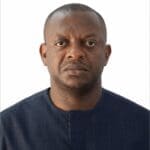
Sunday Michael Ogwu is a Nigerian journalist and editor of Pinnacle Daily. He is known for his work in business and economic reporting. He has held editorial roles in prominent Nigerian media outlets, where he has focused on economic policy, financial markets, and developmental issues affecting Nigeria and Africa more broadly.