

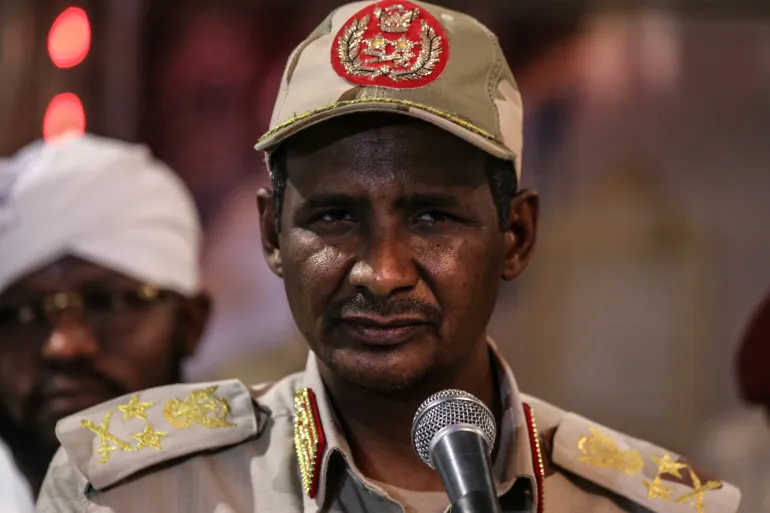
Sudan’s Rapid Support Forces (RSF) have declared a unilateral three-month humanitarian truce, signalling a temporary halt in fighting even as the Sudanese Armed Forces (SAF) maintained their rejection of a recent ceasefire proposal.
RSF commander Mohamed Hamdan Dagalo, also known as Hemedti, announced the pause in a recorded address on Monday.
There was no immediate response from the SAF, led by General Abdel Fattah al-Burhan, on whether the army would comply.
Truce Coordinated with Regional and International Actors
The RSF said the truce was reached in coordination with the Quad, comprising Egypt, Saudi Arabia, the United Arab Emirates and the United States, as well as the African Union and the Intergovernmental Authority on Development (IGAD).
The group said the aim was to improve civilian protection and ease the delivery of humanitarian aid.
The announcement came a day after al-Burhan rejected a ceasefire plan put forward by the same Quad, describing it as biased and accusing the UAE of backing the RSF, a claim Abu Dhabi has repeatedly denied.
He argued the proposal would “eliminate” the national army while preserving RSF positions, calling it the “worst yet”.
Previous Ceasefire Attempts Failed
Earlier this month, the RSF had said it accepted a Quad-backed ceasefire plan but resumed drone strikes on SAF-held areas shortly afterward.
Hemedti described the new truce as the first step towards a political resolution of the conflict, which erupted in April 2023 after the collapse of a fragile power-sharing arrangement between him and al-Burhan.
He added that the RSF had approved a field-monitoring mechanism and pledged full commitment to holding those responsible for abuses against civilians to account.
Humanitarian Crisis Worsens
Sudan’s war has killed tens of thousands, displaced more than 14 million people and created a severe humanitarian crisis.
The RSF captured el-Fasher, capital of North Darfur, last month. Satellite images released in recent weeks show fighters burning and burying bodies in large numbers, prompting concerns of attempts to hide evidence of mass killings.
As of Monday, it remained unclear whether al-Burhan’s stance had shifted. On Sunday, he insisted no Sudanese “will accept the presence of these rebels or for them to be part of any solution in the future.”
The conflict continues to draw regional and international attention as mediators struggle to secure a lasting ceasefire.
Source: Jazeera

Rafiyat Sadiq is a political, justice, and human rights reporter with Pinnacle Daily, known for fearless reporting and impactful storytelling. At Pinnacle Daily, she brings clarity and depth to issues shaping governance, democracy, and the protection of citizens’ rights.